



Why Women May Need an Ergonomic Office Chair That Better Fits Their Body Proportions
Why might women benefit from an ergonomic office chair that is better suited to their body proportions? The answer is less about a “women-only” label and more about fit. Women vary widely in height and body shape, but differences in lower-leg length, hip width, shoulder width, and torso proportions can all affect how well an office chair fits.

Two people of the same height can still need different seat heights, seat depths, lumbar-support positions, and armrest spacing. That is why choosing an ergonomic office chair for women should begin with body dimensions and adjustment ranges rather than the number of features listed on the product page.
Which Body Measurements Affect Ergonomic Chair Fit for Women?
Height alone is not enough to determine whether a chair will fit. For many women, several smaller measurements are more useful when comparing chair dimensions.
Popliteal Height and Seat Height
Popliteal height is the vertical distance from the floor to the underside of the knee while seated. It is one of the most useful measurements for estimating whether a chair can be lowered enough.
If the seat is too high, the feet may not rest securely on the floor and the user may begin sliding forward. If it is too low, the legs may feel overly bent.
For shorter women, the minimum seat height deserves particular attention. A chair may technically offer height adjustment, but that does not mean its lowest position will suit every user. If the minimum height is still too high, other adjustments cannot fully compensate for the mismatch.
Buttock-to-Popliteal Length and Seat Depth
Buttock-to-popliteal length is the horizontal distance from the back of the buttocks to the area behind the knee while seated. This measurement is closely related to seat depth.
A seat that is too deep can make it difficult for shorter-legged users to sit fully against the backrest. They may move forward to keep the front edge away from the back of the knees, which then reduces contact with the lumbar support.
For shorter women or households where several people share the same chair, adjustable seat depth can therefore be more useful than simply having a thicker seat cushion.
Hip Width and Shoulder Width
Seat width should leave some room beyond the widest part of the hips so the user does not feel restricted by the sides of the seat.
Wider is not automatically better, however. A very wide chair can also place the armrests farther from the body.
Users with narrower shoulders should pay particular attention to the minimum distance between the armrests. If the armrests sit too far apart, the elbows must move outward to reach them, making it harder for the shoulders to remain relaxed.
For this reason, the inward adjustment range of adjustable armrests may matter more than whether the product is marketed as “4D” or “6D.”
How to Measure Your Body Before Choosing an Ergonomic Chair
You do not need professional anthropometric equipment to take a few useful measurements at home. A firm chair, a wall, and a tape measure are usually enough. It is also helpful to wear the shoes you normally use while working, since sole thickness affects your practical sitting height.
Step 1: Measure Popliteal Height
Sit upright with both feet flat on the floor and your lower legs close to vertical. Measure from the floor to the underside of the knee.
Use this number mainly to judge whether the chair’s minimum seat height is likely to be too high for you.
Step 2: Measure Buttock-to-Popliteal Length
Sit with your buttocks against a vertical backrest or wall. Measure horizontally from the back of the buttocks to the area behind the knee.
The usable seat depth should be somewhat shorter than this measurement so there is still room behind the knees.
Step 3: Measure Hip Width and Shoulder Width
Measure hip width while seated at the widest part of the hips. This can be compared with the usable width of the seat rather than the chair’s total outside width.
For shoulder width, let both arms hang naturally and measure approximately from the outer edge of one shoulder to the other. This gives a useful reference when checking armrest spacing.
Step 4: Measure Seated Torso Length
Sit upright and measure from the seat surface to the upper shoulder area. It can also be helpful to note the approximate height from the seat to the natural inward curve of the lower back.
These measurements can help when comparing backrest height, lumbar-support range, and headrest position. For women with shorter torsos, overall height alone can be misleading when judging whether the headrest or lumbar support will sit in the right place.
Seat Shape Should Support the Pelvis and Thighs, Not Just Feel Soft
Many people judge a seat cushion by pressing it with a hand and deciding whether it feels soft enough. Seat shape matters just as much.
A well-designed seat should provide a stable base for the pelvis while allowing the thighs to extend forward naturally. It should also avoid concentrating too much pressure in a small area.

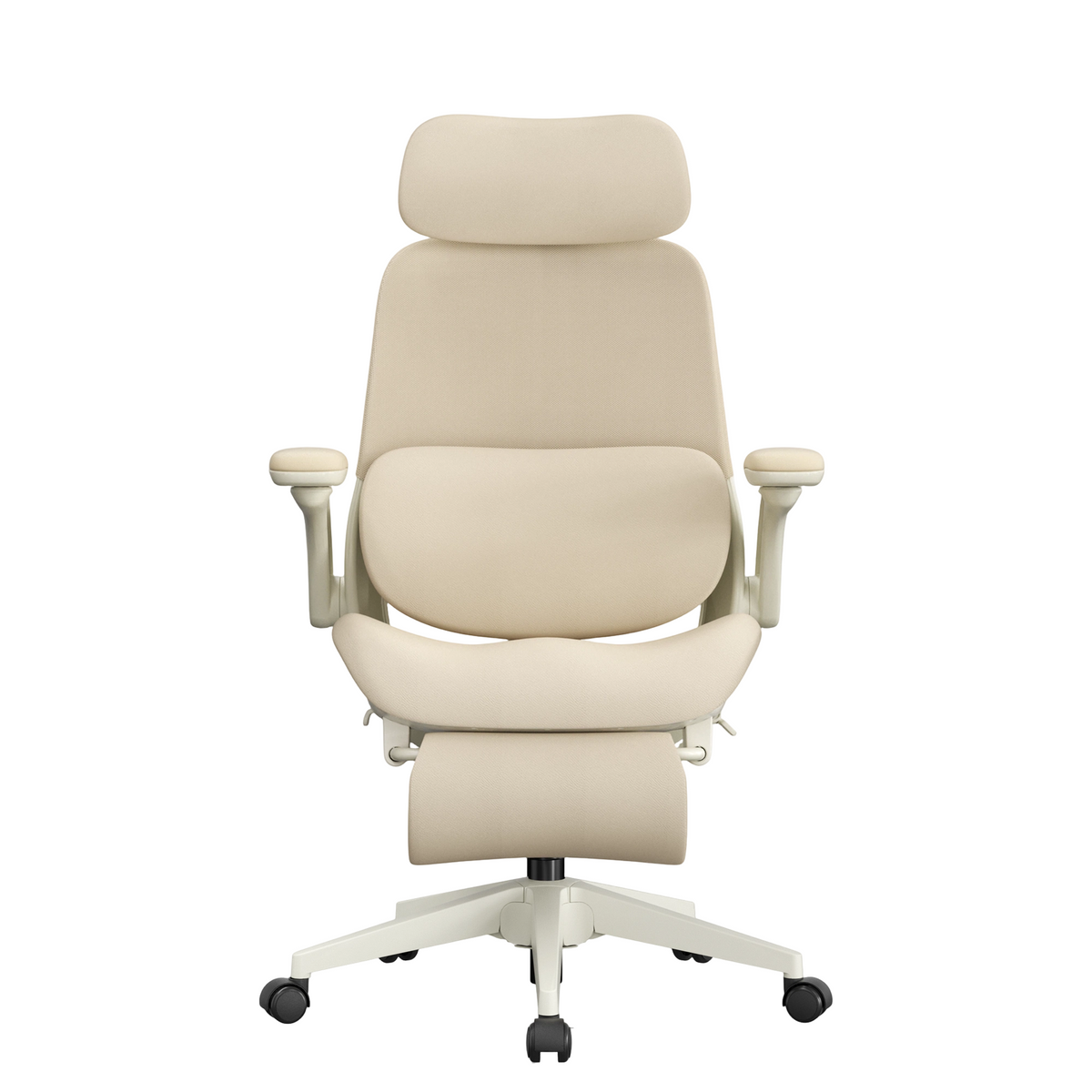
Some ergonomic chairs designed with women or smaller users in mind use a W-shaped seat cushion. The raised support areas on the left and right are intended to support the buttocks and sitting-bone area, while the center and front of the cushion transition more gradually toward the thighs.
The purpose is not simply to create a distinctive shape. It is to help keep the pelvis more centered on the seat.
A W-shaped seat is not automatically suitable for everyone, however. Users with wider hips should make sure the usable seat width is generous enough and that the side contours do not feel restrictive. Slimmer users should check whether the seat contours actually make comfortable contact with the body. Foam resilience, seat depth, and front-edge shape should all be considered together.
Lumbar Support for Women Is More About Position Than Pressure
Lumbar support is one of the most heavily marketed features on ergonomic office chairs. Some products emphasize a strong feeling of pressure against the lower back, but for women and users with shorter torsos, position often matters more than intensity.
If the lumbar support is fixed too high, it may press into the middle of the back rather than the lower-back curve. If it is too low, the contact may sit too close to the upper pelvis.
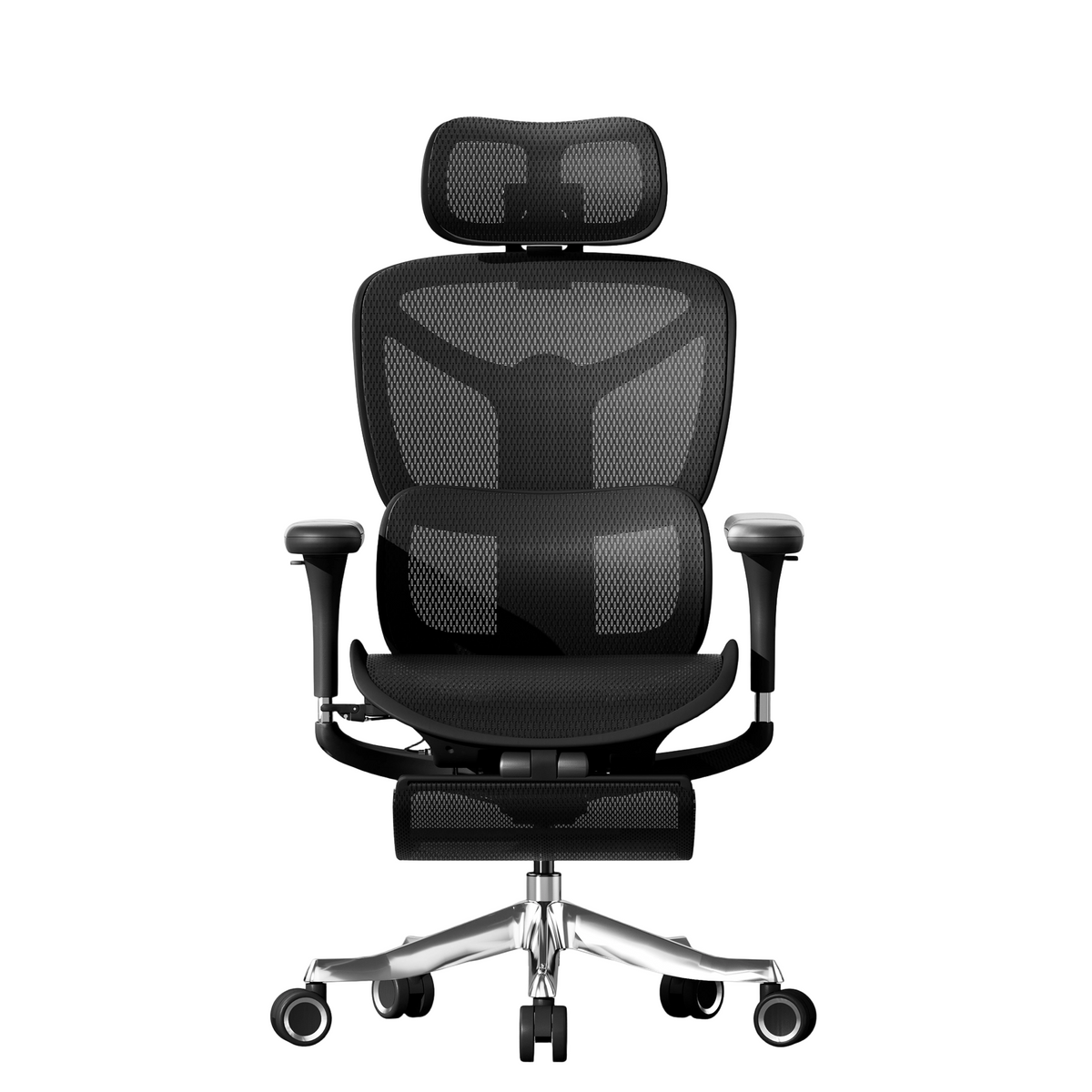
A vertically adjustable lumbar support can accommodate different torso lengths, while forward-and-back adjustment can change the depth of contact between the lower back and the backrest.
What Should Good Lumbar Support Feel Like?
When you lean naturally against the backrest, the support should sit around the inward curve of the lower back without constantly pushing the body forward.
Good support does not have to feel especially aggressive. Ideally, the lower back stays in comfortable contact with the backrest without requiring you to consciously adjust your posture.
Backrest, Headrest, and Recline Should Accommodate Position Changes
People do not sit in one position for an entire workday. Typing may involve a more upright posture, while reading or meetings may involve a slight recline. Short breaks may involve leaning farther back.
That means the backrest should not be judged only by its height and width. It is also important to see whether support remains consistent as the body moves.
For shorter women or users with shorter torsos, the minimum headrest height is particularly important. If the headrest cannot be lowered far enough, it may contact the top of the head instead of the back of the head or neck.
Multi-position recline locks, dynamic backrests, and adjustable headrests are useful because they provide more options for different sitting positions rather than forcing the user into one fixed posture.
How to Test an Ergonomic Office Chair for Women
If you can try the chair in person, it is usually better to start with the basic chair dimensions rather than adjusting the headrest or lumbar support first.
1. Set the Seat Height
Place both feet securely on the floor and keep the thighs in a natural position. You should not have to slide forward to reach the floor.
2. Check the Seat Depth
Sit fully back in the chair. Your back should still reach the backrest while leaving some space between the seat edge and the back of the knees.
3. Adjust the Lumbar Support
Make sure the support reaches the lower back rather than the middle of the back or the upper pelvis. It should not create a strong, uncomfortable pressure point.
4. Adjust the Armrests
The shoulders should remain relaxed, and the elbows should not need to move noticeably outward. The forearms should be able to rest naturally.
5. Test Upright and Reclined Positions
Move gradually from an upright working position into a slight recline. Check whether support under the lower and upper back suddenly disappears.
6. Check the Headrest Last
While reclined, the headrest should contact the back of the head or neck area without forcing you to stretch upward or change your natural posture.
If all of these areas can be adjusted into comfortable positions, the chair’s dimensions and adjustment range are more likely to match your body. If the basic dimensions do not fit, extra features are unlikely to solve the problem.
The Best Ergonomic Office Chair for Women Is Ultimately About Fit
Why do women need an ergonomic chair that better fits their body proportions? It is not because women require an entirely different type of chair. The real issue is that the dimensions and adjustment ranges of a general-purpose office chair may not cover every combination of leg length, hip width, shoulder width, and torso proportions.
When choosing an ergonomic office chair for women, it can be useful to measure popliteal height, buttock-to-popliteal length, hip width, shoulder width, and seated torso length. These measurements can then be compared with the chair’s minimum seat height, seat-depth range, usable seat width, lumbar-support position, armrest spacing, and headrest adjustment range.
If you can try the chair in person, check it in this order: seat height, seat depth, lumbar support, armrests, recline, and headrest.
Compared with labels such as “women’s chair” or “chair for petite users,” the real indicators of fit are dimensions, adjustment range, and how well the chair matches the body. Once those basics are right, features such as a W-shaped seat cushion, 4D armrests, 3D headrest, and multi-position recline become much more meaningful.


Leave a comment
This site is protected by hCaptcha and the hCaptcha Privacy Policy and Terms of Service apply.