

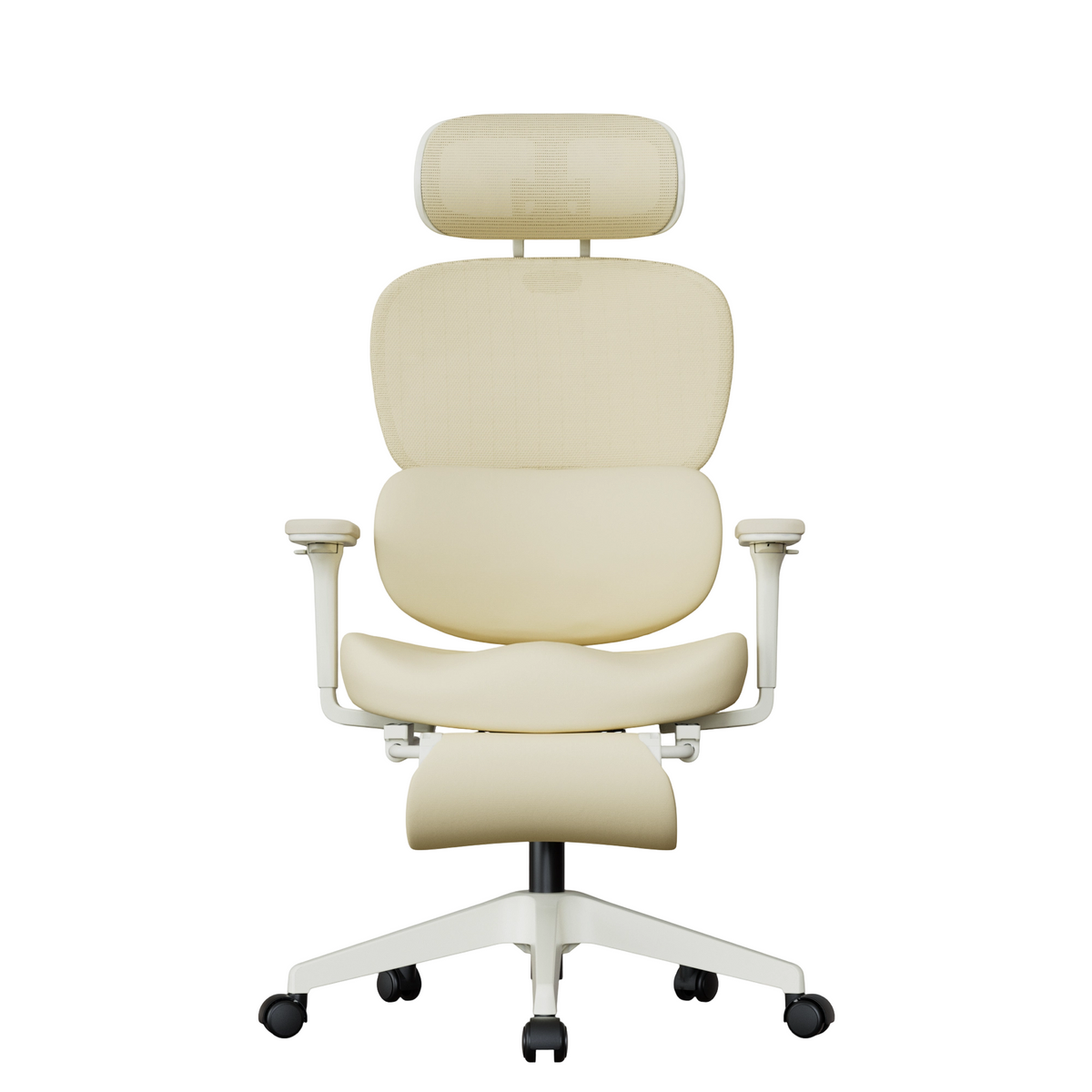
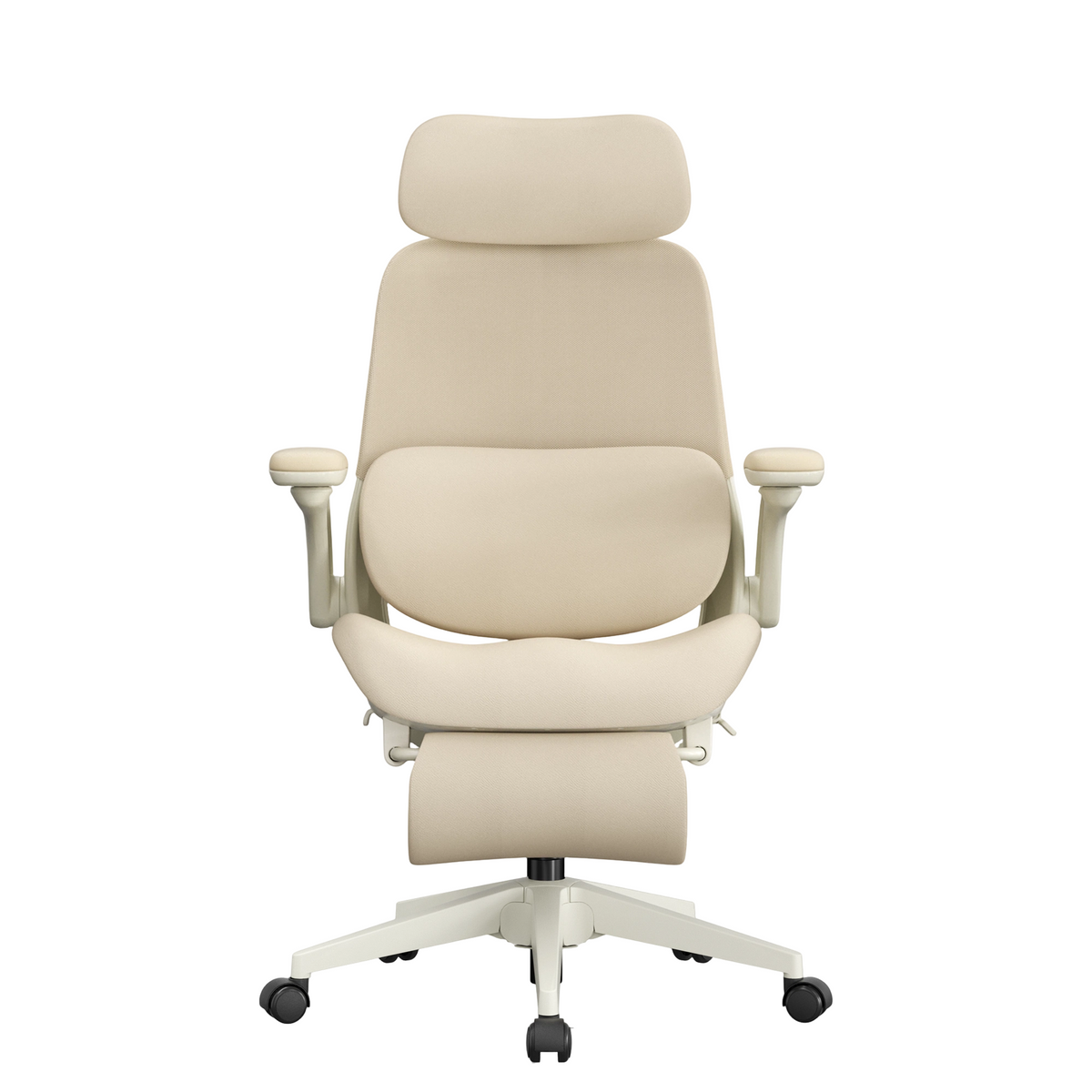
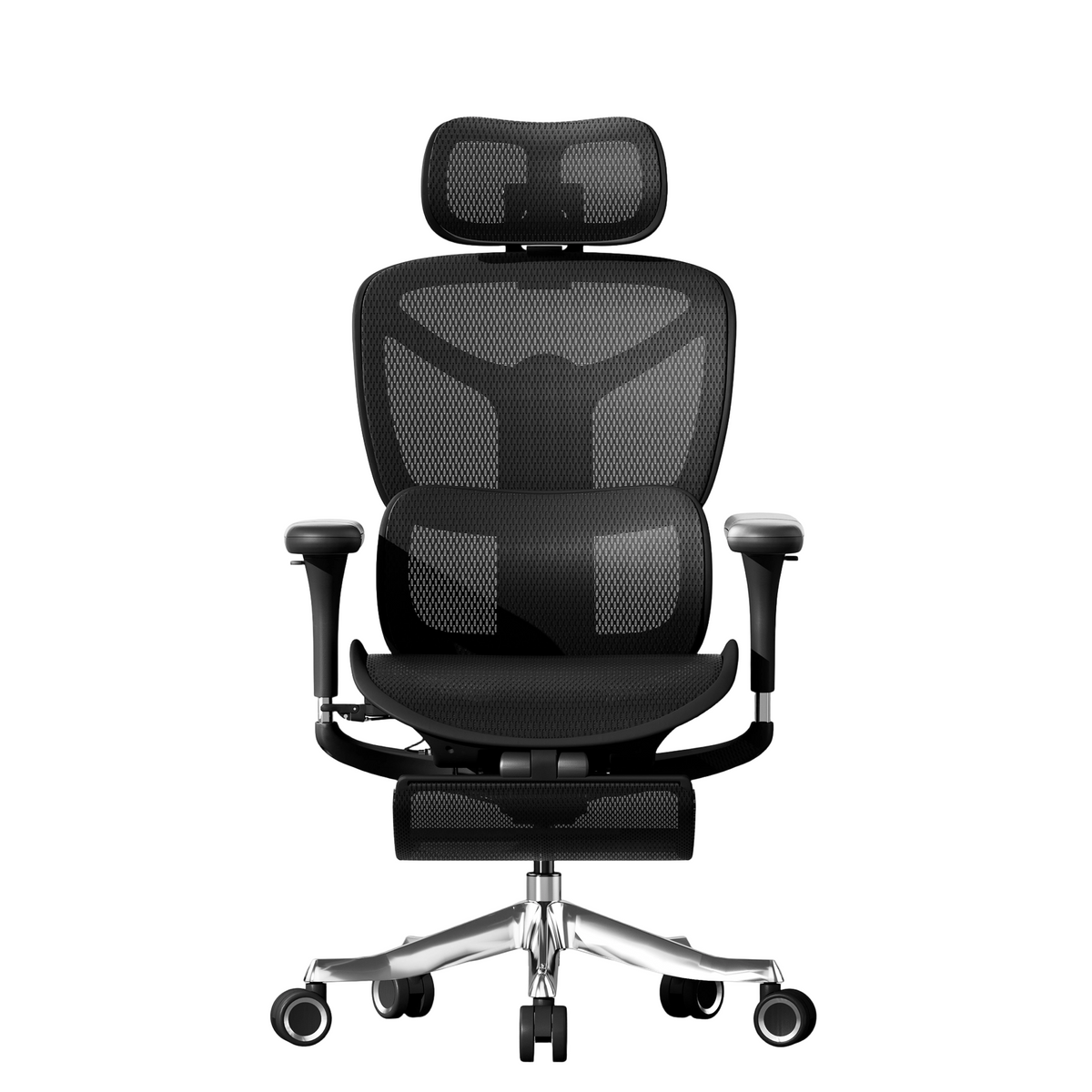
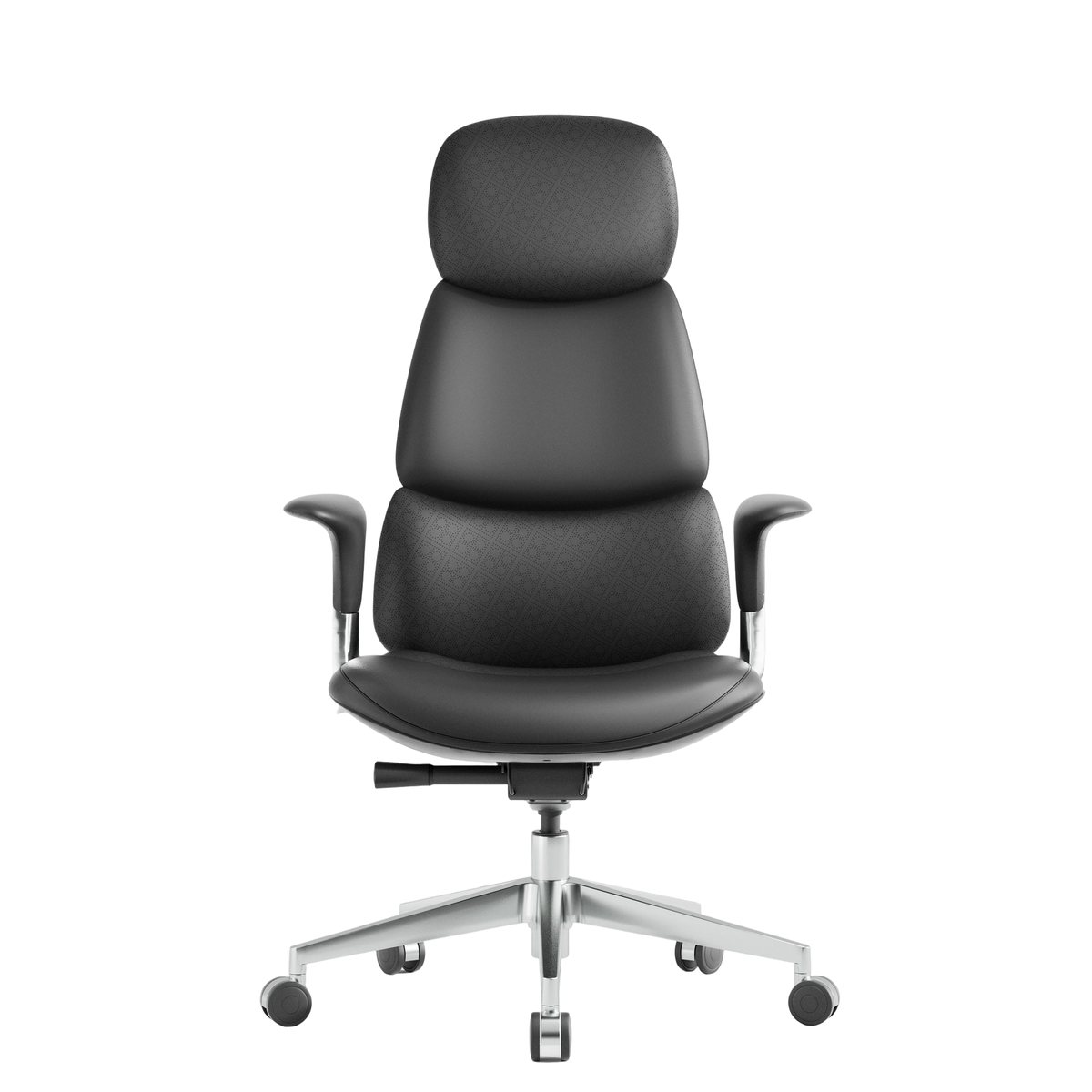

What Is Synchro-Tilt on an Office Chair?
Synchro-tilt is a reclining mechanism that allows the backrest and seat pan to move together at a controlled ratio when the user leans back. Unlike a basic office chair, where the backrest may recline on its own or the entire chair may tilt as one rigid unit, a synchro-tilt mechanism allows the backrest to travel farther while the seat changes angle to a lesser degree.

This coordinated movement helps the back, pelvis, and thighs maintain a more natural relationship throughout the recline. For people who spend long hours working at a desk, the benefit is not simply that the chair can lean back. A well-designed synchro-tilt system makes it easier to move between upright work, a slight recline, and a more relaxed sitting position without losing support.
That is why synchro-tilt has become a common feature in many mid-range and premium ergonomic office chairs.
How Synchro-Tilt Differs From a Basic Recline
Traditional office chair recline systems are often relatively simple. Some allow only the backrest to move backward, while others tilt the seat and backrest together at nearly the same angle. The second type is often described as a center-tilt or rocking mechanism.
Synchro-tilt works differently. As the user leans back, the backrest moves through a larger angle while the seat follows through a smaller range. Many mechanisms use a backrest-to-seat movement ratio somewhere around 2:1 or 3:1, although there is no single ratio that defines a good design.
The exact feel depends on the pivot points, linkage geometry, spring system, and overall mechanism. What matters more than the number itself is how the chair behaves during movement. A well-tuned mechanism should not lift the user abruptly, force excessive pressure into the front of the thighs, or make the feet lose stable contact with the floor.
Why Ergonomic Office Chairs Use Synchro-Tilt
People rarely stay in one sitting position throughout the working day. Typing often brings the body into a more upright position, while reading, video calls, thinking, or taking a short break usually involve some degree of recline.
If a chair only supports one fixed posture, the user has to keep adjusting the body to fit the chair. Over time, that can make the sitting experience feel restrictive.
Synchro-tilt approaches the problem from the opposite direction. Instead of locking the body into a single angle, the chair moves with changes in posture. As the backrest reclines, the upper body gains more support while the seat angle changes only moderately. This helps the thighs remain supported and makes it easier to keep the feet grounded.
For long periods of desk work, this type of dynamic sitting is generally more practical than trying to maintain one “perfect” posture all day.
The Mechanism Depends on Pivot Points and Motion Ratio
From an engineering standpoint, synchro-tilt is more than a spring underneath the seat. The movement is typically created by a combination of pivots, linkages, springs, and other mechanical or elastic components inside the chair mechanism.
A well-designed system aims to make the chair’s motion follow the body’s natural movement as closely as possible, especially around the hip area. When the motion path is well controlled, the backrest can remain in contact with the user instead of sliding noticeably against the back.
Poor pivot placement can create the opposite effect. As the chair reclines, the backrest may pull clothing upward or cause the lumbar support to move away from the part of the lower back it was meant to support.
For this reason, maximum recline angle should never be the only specification used to judge a tilt mechanism. Backrest contact, lumbar support position, seat stability, and smoothness of motion often matter more in everyday use.
Tilt Tension Has a Major Effect on How Natural Reclining Feels
Ergonomic chairs with synchro-tilt often include tilt tension adjustment, allowing the user to control how much force is required to recline.
If the resistance is too high, a lighter user may have to push hard against the backrest just to move it. If the resistance is too low, a heavier user may feel the chair drop backward too quickly as soon as body weight is applied.
A properly adjusted mechanism should respond progressively. As the user leans back, the backrest should move smoothly without sudden acceleration. When the user returns toward an upright position, the chair should also provide controlled support rather than snapping forward.
Some chairs use a manual tension knob that changes spring preload. Others use weight-responsive mechanisms that automatically vary resistance according to the force applied by the user. Neither approach is automatically better. What matters is whether the resistance range suits the intended users and whether the movement remains predictable across the recline.
Multi-Position Locking and Free-Float Recline Serve Different Purposes
A synchro-tilt chair does not necessarily have to move freely all the time. In real office use, many people want both dynamic movement and the ability to hold the chair at a preferred angle.
That is why many ergonomic office chairs combine synchro-tilt with multi-position tilt locking. A more upright setting may work well for focused typing, while a mild recline can be comfortable for reading or video meetings. For short breaks, the lock can be released so the chair moves more freely with the body.
It is also worth paying attention to what happens when the lock is released. Some mechanisms immediately push the backrest forward, which can feel abrupt if there is no anti-shock or safety release design. More refined systems often require the user to lean back slightly before the mechanism unlocks, reducing the chance of the backrest suddenly pushing forward.

A Larger Recline Angle Does Not Automatically Mean Better Ergonomics
Office chair specifications often highlight numbers such as 110°, 125°, 135°, or even larger recline angles. These figures describe the available range of motion, but they do not tell you how well the chair supports the body throughout that range.
For normal office work, the most useful part of the recline is often the range between upright sitting and a moderate backward lean. What matters is whether the headrest, lumbar support, backrest, and seat continue to support the body as the chair moves.
If a large recline angle causes the front of the seat to rise too much, lifts the feet away from the floor, or allows the lumbar support to lose contact with the lower back, the extra range may add little practical value for desk work.
A good ergonomic recline is not defined by how far the chair can lean back. It is defined by how well the chair maintains support while the user changes posture.
How to Judge Whether a Synchro-Tilt Mechanism Is Well Designed
You do not need to understand every internal component of the chair to evaluate a synchro-tilt system. A few practical details usually reveal more than a long list of mechanical specifications.
Pay attention to whether the recline feels smooth and controlled, whether the seat changes angle only moderately, whether the lumbar support stays in roughly the same place on the lower back, and whether the feet can remain comfortably supported.
If the chair offers tilt tension adjustment, the range should be broad enough to accommodate different body weights. If it includes multiple locking positions, those positions should correspond to useful working and reclining postures rather than simply increasing the number of advertised settings.
For online shoppers, the phrase “synchro-tilt” by itself does not provide much information. It is more useful to look for details about tilt ratio, resistance adjustment, locking positions, recline range, and how the lumbar support behaves as the backrest moves.
Why Synchro-Tilt Matters in an Ergonomic Office Chair
Once you understand what synchro-tilt on an office chair actually does, it becomes clear that the feature is not mainly about turning an office chair into a recliner. Its purpose is to help the chair continue supporting the body as posture changes.
A well-designed synchro-tilt mechanism coordinates the backrest, seat, and chair base so that the transition from upright work to a moderate recline does not significantly disrupt lumbar support, thigh support, or foot position.
When comparing ergonomic office chairs, it is therefore more useful to look beyond the maximum recline angle. The tilt ratio, resistance adjustment, locking system, movement path, and backrest contact all have a direct effect on how the chair feels during long periods of use. In practice, a smooth and well-balanced synchro-tilt mechanism often contributes more to everyday comfort than adding more features simply to make the specification list look longer.


Leave a comment
This site is protected by hCaptcha and the hCaptcha Privacy Policy and Terms of Service apply.